
The Channel Effect Was Real (and So Was Billy Idol!)
The Best Part of the Channel Is Still the People
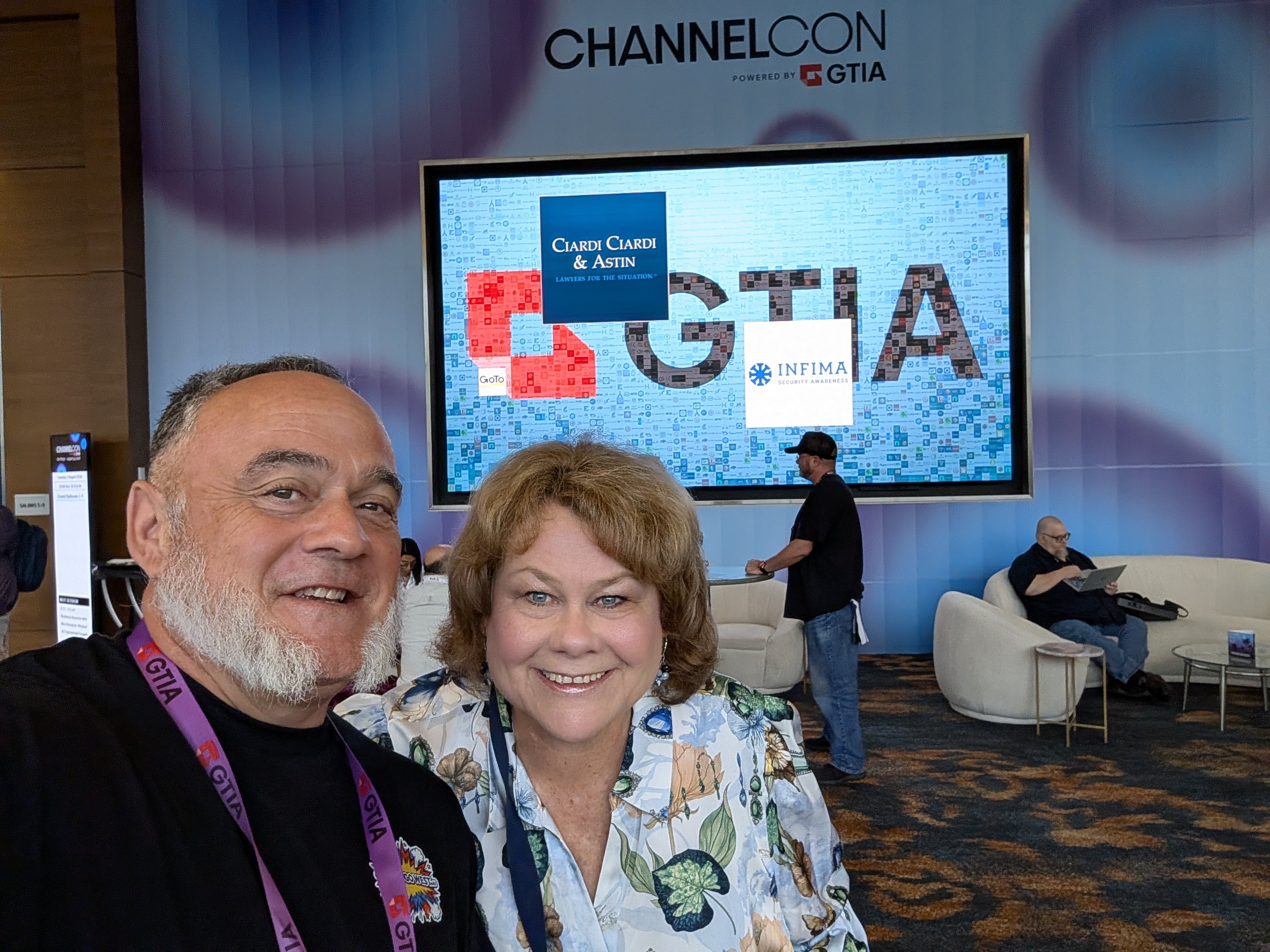
Before the sessions, booth traffic and neon headbands, we had a fantastic dinner overlooking the San Diego skyline with Mike Hannon and his family.
Mike came to ChannelCon to help present our place among the finalists for the inaugural GTIA Innovate Awards. Sharing that moment with him and his family made the experience even more meaningful.
That is the part of channel events no agenda can fully capture. Handshakes become conversations. Conversations become friendships. Friendships become partnerships, better ideas and, sometimes, entirely new directions for a business.
It was also wonderful spending time with GTIA leaders, including Nancy Hammervik and Dan Wensley. Nancy, Dan and the entire GTIA team did an exceptional job.
ChannelCon felt organized without feeling overproduced, ambitious without losing its warmth, and packed with education while still leaving room for the human moments that make this industry special.
Our Biggest ChannelCon Takeaways
There was a lot to absorb across the general sessions, executive programming and hallway conversations. These are the ideas that followed us home.
1. AI Has Graduated from “Interesting” to “Operational”
The clearest message from ChannelCon was that the channel is moving beyond AI curiosity.
The serious conversation is now about where AI belongs in a workflow, how results will be measured, who governs it and how an MSP or IT service provider can turn that capability into a repeatable offering.
The Channel Visionaries Power Panel focused on the shift from AI hype to measurable ROI. The Channel Executive Summit’s AI transformation discussion examined how leadership, partnerships, workforce models and services are changing together.
The common thread was wonderfully practical: start with genuine business needs, earn trust, protect the data and use AI inside your own organization before telling clients how to use it in theirs.
That is also the thinking behind our work at GoWest.ai and BizVantage.ai. Businesses do not need another shiny AI object. They need to identify the right workflows, understand the risks, establish governance and carry the strongest opportunities through implementation.
Assess it. Scale it. Deliver it.
2. Governance Is Becoming Part of the Product
Did you know GTIA used ChannelCon to announce not one, but two major standards initiatives?
The Consortium for Responsible IT Services, created with Texas A&M’s Global Cyber Research Institute, is working toward a self-regulatory framework for IT services. The new Managed Intelligence Alliance is focused specifically on making managed AI repeatable, governable and trustworthy at scale.
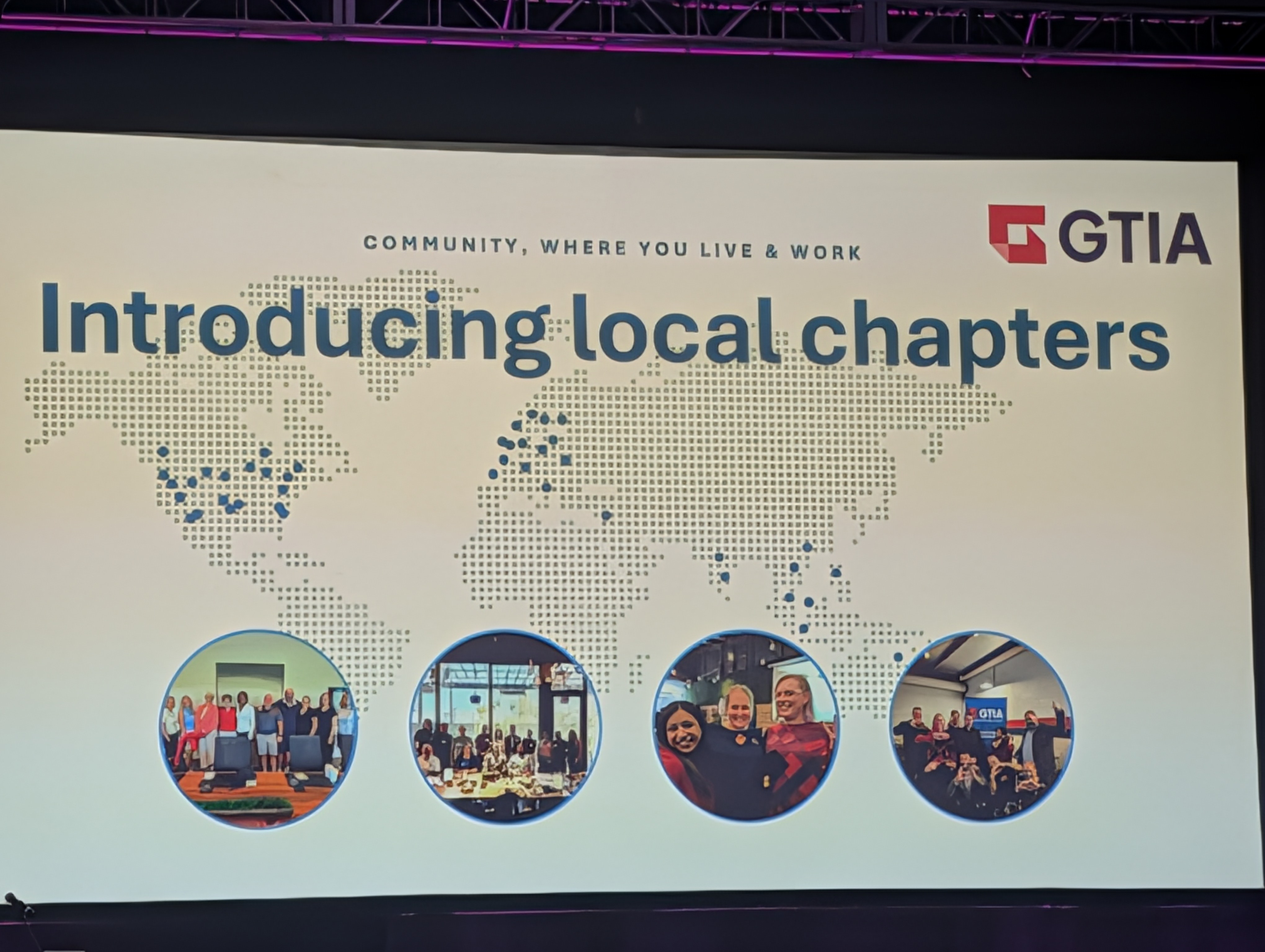
GTIA also announced member-led local chapters, an AI Essentials training benefit, participation in the United Nations’ AI for Good initiative and a new AI and cyber resource centre.
These were not side announcements. Together, they point to a more mature phase for the channel, one where capability must be matched by accountability.
Our takeaway is simple: AI policy, security, change management and measurement cannot be bolted on after deployment. They are part of the service.
MSPs that help clients make safe, defensible AI decisions will be in a far stronger position than those selling tools without a plan.
3. There Is Always a Way, but You Still Have to Walk Through the Door
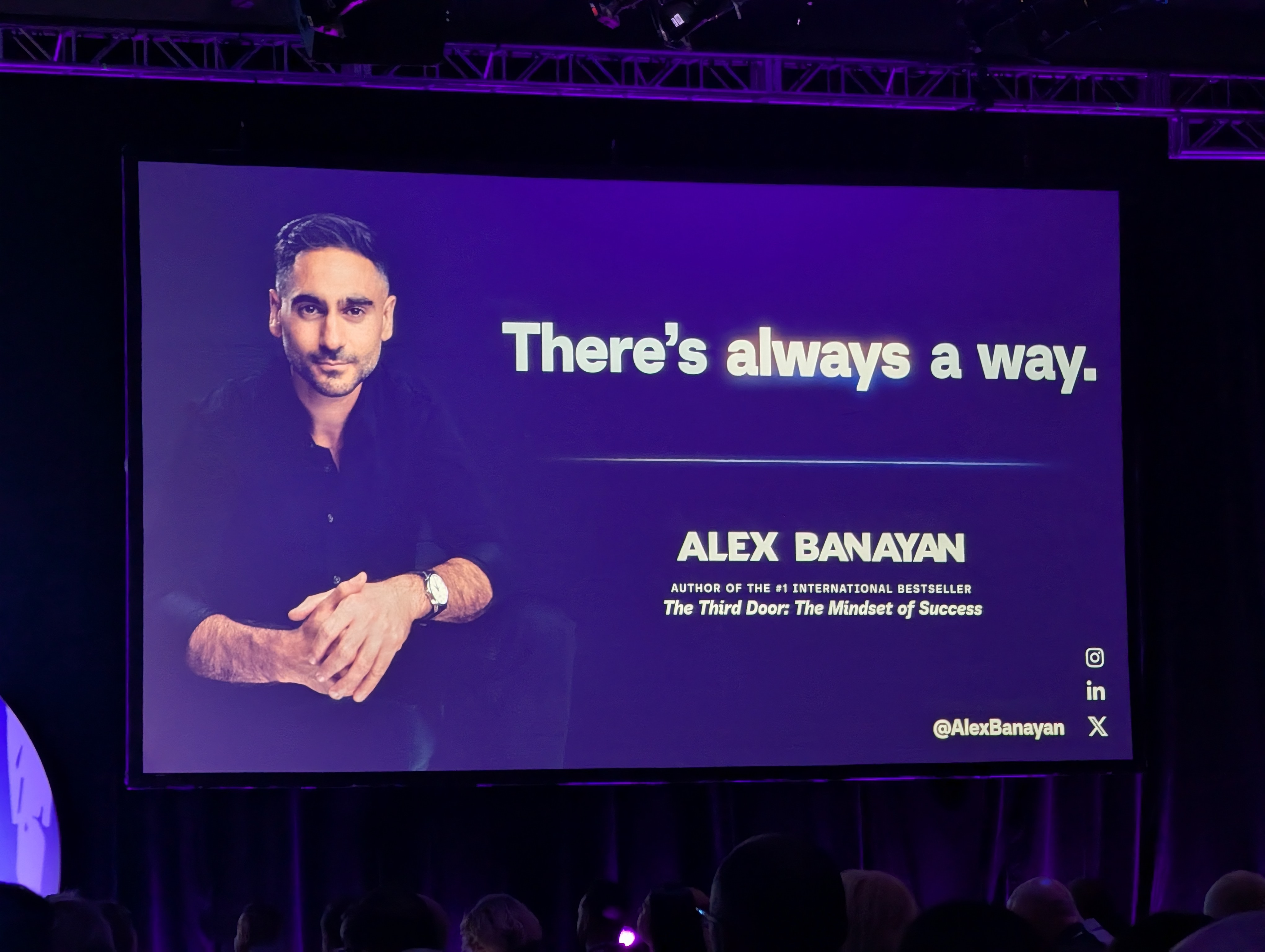
Alex Banayan’s “There’s always a way” message landed at exactly the right time.
His Third Door framework challenges us to stop treating a blocked traditional route as the end of the journey. He also offered a useful three-step approach to setbacks: reset, realign and reexamine.
That applies to more than cancelled flights.
Many organizations are waiting for a perfect AI strategy, perfect data or perfect timing. Meanwhile, leaders are finding a responsible first door they can actually open: one workflow, one measurable pain point and one controlled proof of value.
Progress rarely begins with a grand transformation. It begins when someone decides to try the next sensible thing.
4. Technology Changes Fast; Good Leadership Still Looks Human
Ron Howard’s conversation brought a different lens to the same challenge.
Across a career spanning more than six decades, he has adapted to new tools, formats and audience expectations while maintaining a clear creative vision.
His advice to “go into the friction” early stood out.
Whether you are directing a film, leading an MSP or implementing AI across a client’s business, unresolved tension does not improve with age. Strong leaders create enough trust for people to raise problems, clarify the vision and contribute their best work.
New technology may democratize what teams can create, but it makes understanding people more important, not less.
5. Local Community May Be GTIA’s Biggest Global Idea
GTIA’s launch of member-led local chapters was another standout announcement. Sixteen chapters were already forming, including activity in Toronto, when the initiative was unveiled.
Why does that matter? Because transformation happens in community.
A global network gives us reach, research and perspective. Local relationships give us a safe place to compare notes, admit what is not working and turn ideas into action.
In AI especially, none of us benefits from pretending we have every answer. We get better faster when we learn out loud together.
A Booth That Finally Looked Like Us
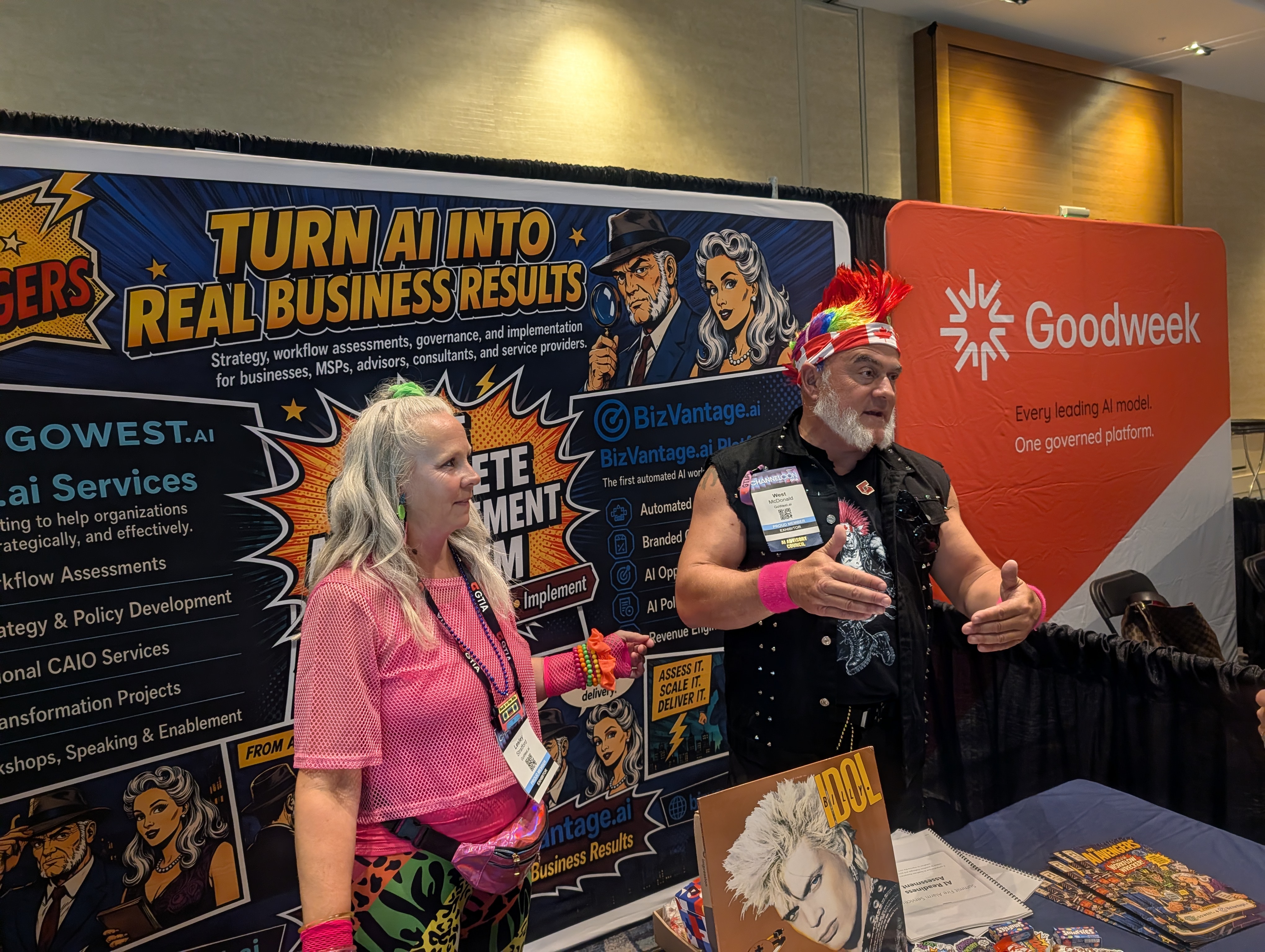
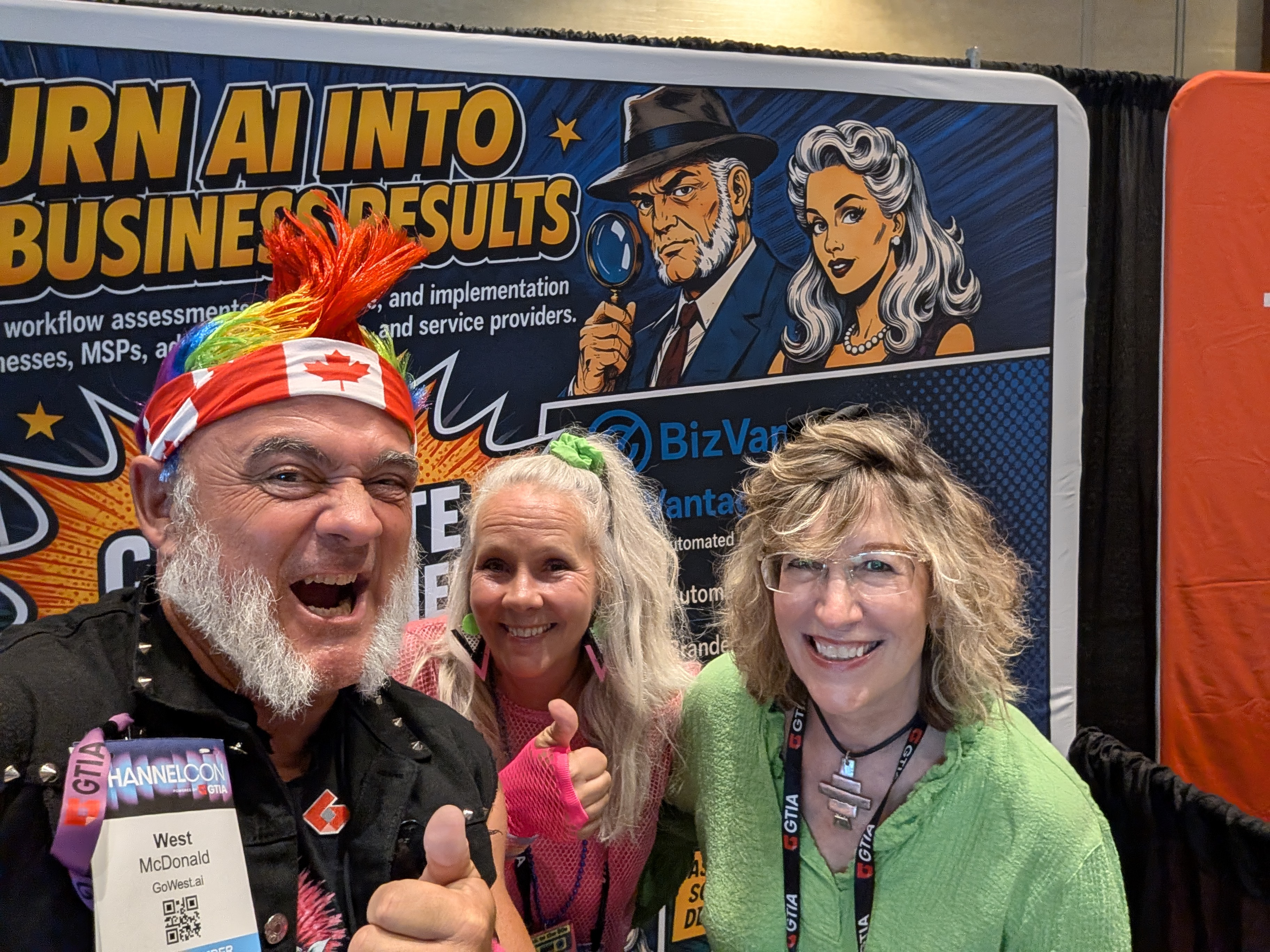
ChannelCon was also the first major outing for our new branding, and the response was amazing.
Our booth did not whisper. It arrived in full comic-book colour with detectives, lightning bolts and one clear promise:
Turn AI into real business results.
The design gave people a reason to stop, smile and ask questions. The message gave them a reason to stay.
Conversations moved quickly from “What do you do?” to “Here is the workflow we cannot seem to fix.” That is exactly the discussion we want to create.
We talked about AI Workflow Assessments, governance and policy development, fractional CAIO support, implementation projects, training and the BizVantage.ai platform.
More importantly, we listened.
The booth confirmed that MSPs, ITSPs, advisors and their clients are hungry for a practical bridge between AI enthusiasm and business execution.
We Did Not Win the Award. But We Won.
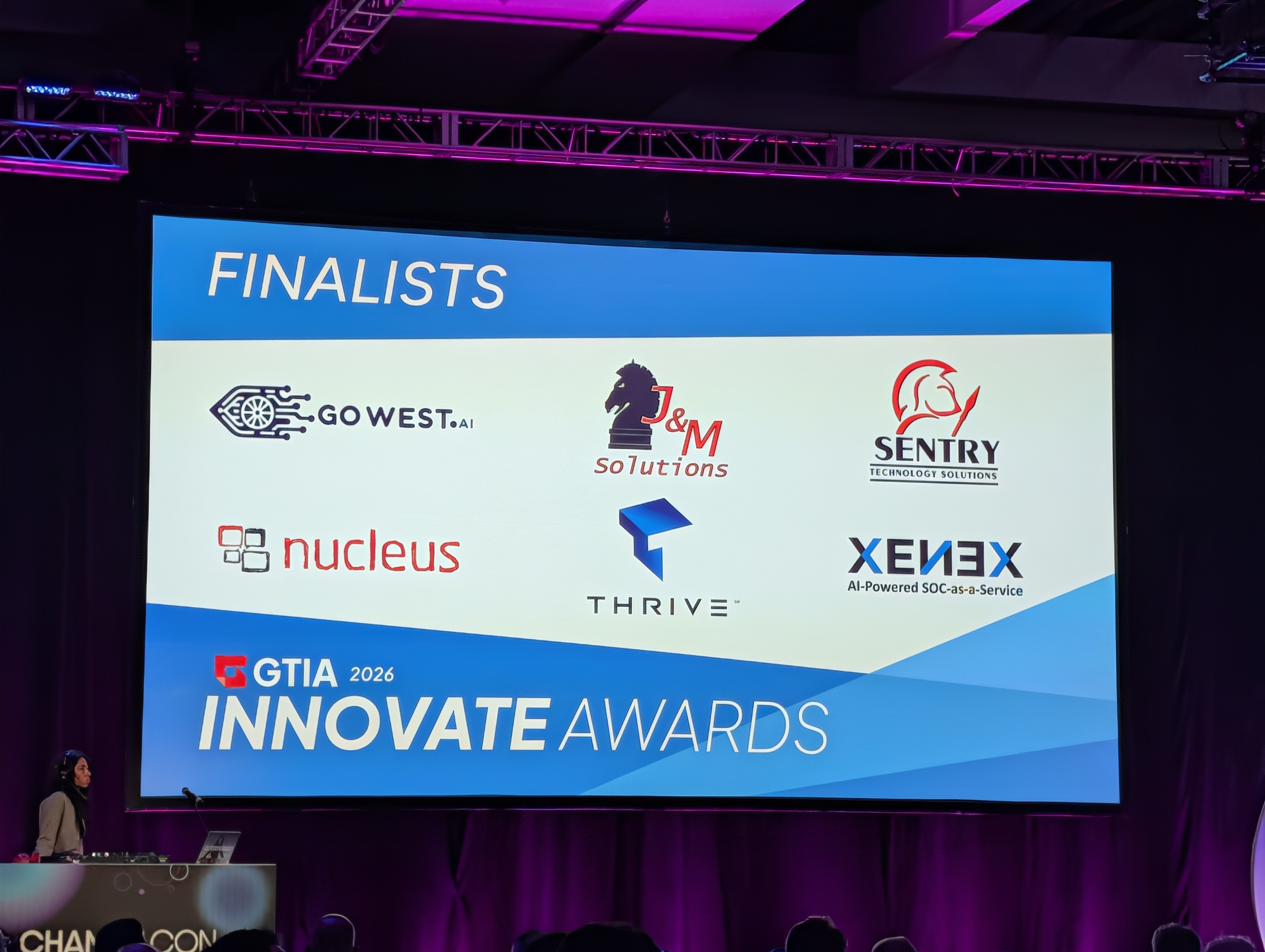
GoWest.ai was named a finalist in the customer-facing category of the inaugural GTIA Innovate Awards for our Service Desk and Field Technician Assistant.
The awards were created to recognize AI solutions already in production and producing measurable business impact. Being selected placed our work alongside some genuinely impressive channel innovation.
Sentry Technology Solutions ultimately won the customer-facing category, while Nucleus Networks won the internal AI category. Congratulations to both teams!
Did we want to win? Of course. I am Canadian, not made of maple-flavoured denial.
But standing there, seeing the GoWest.ai logo among the finalists, having Mike present the moment and hearing the conversations our solution sparked felt like a win in every way that matters.
A finalist spot told us the work is relevant.
The booth told us the market is ready.
The people we met told us the channel wants solutions that move beyond prompts and pilots.
We came home with new relationships, sharper ideas and more conviction than we brought with us. If that is losing, we will take it.
And Then the 1980s Happened
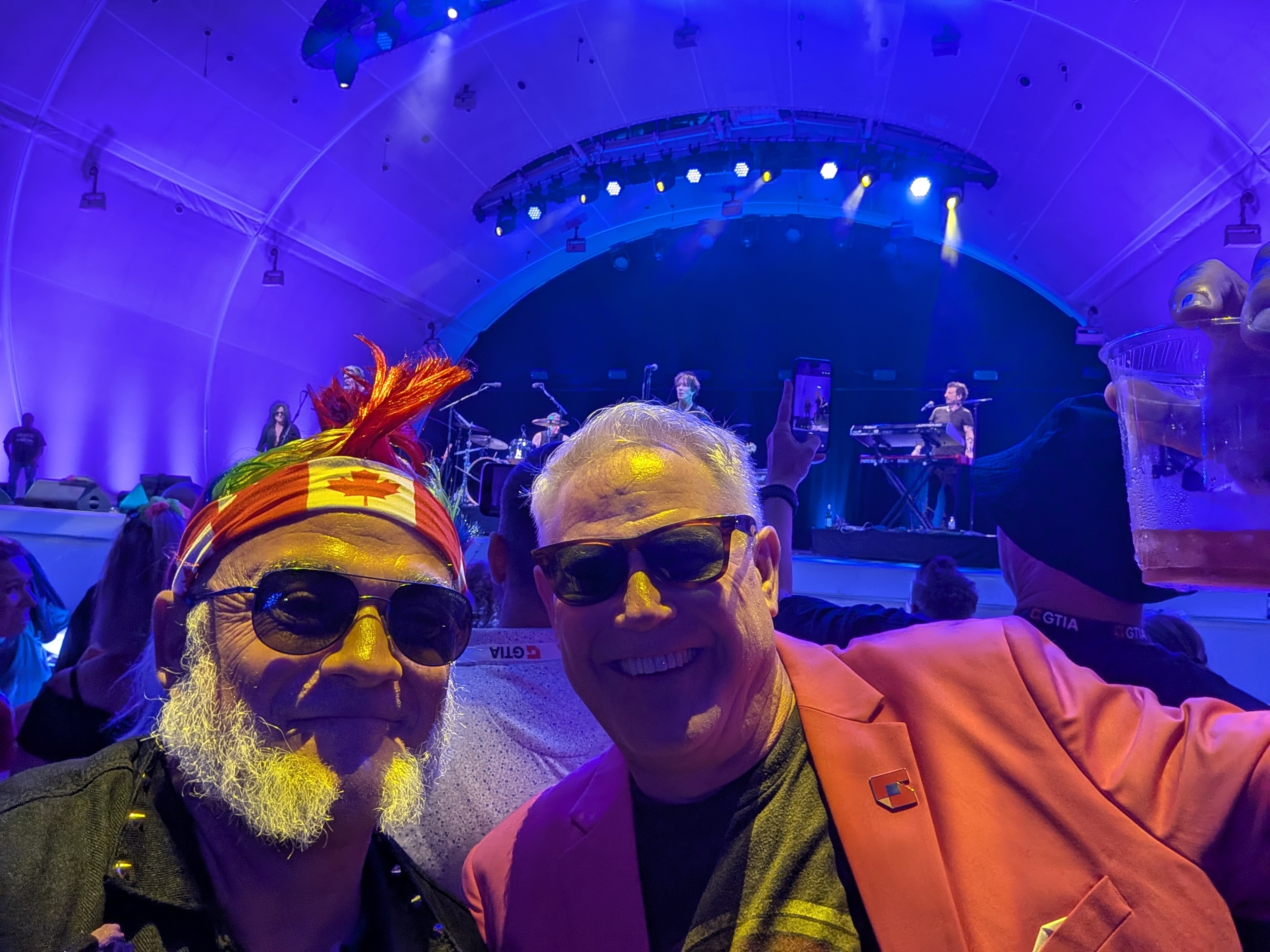
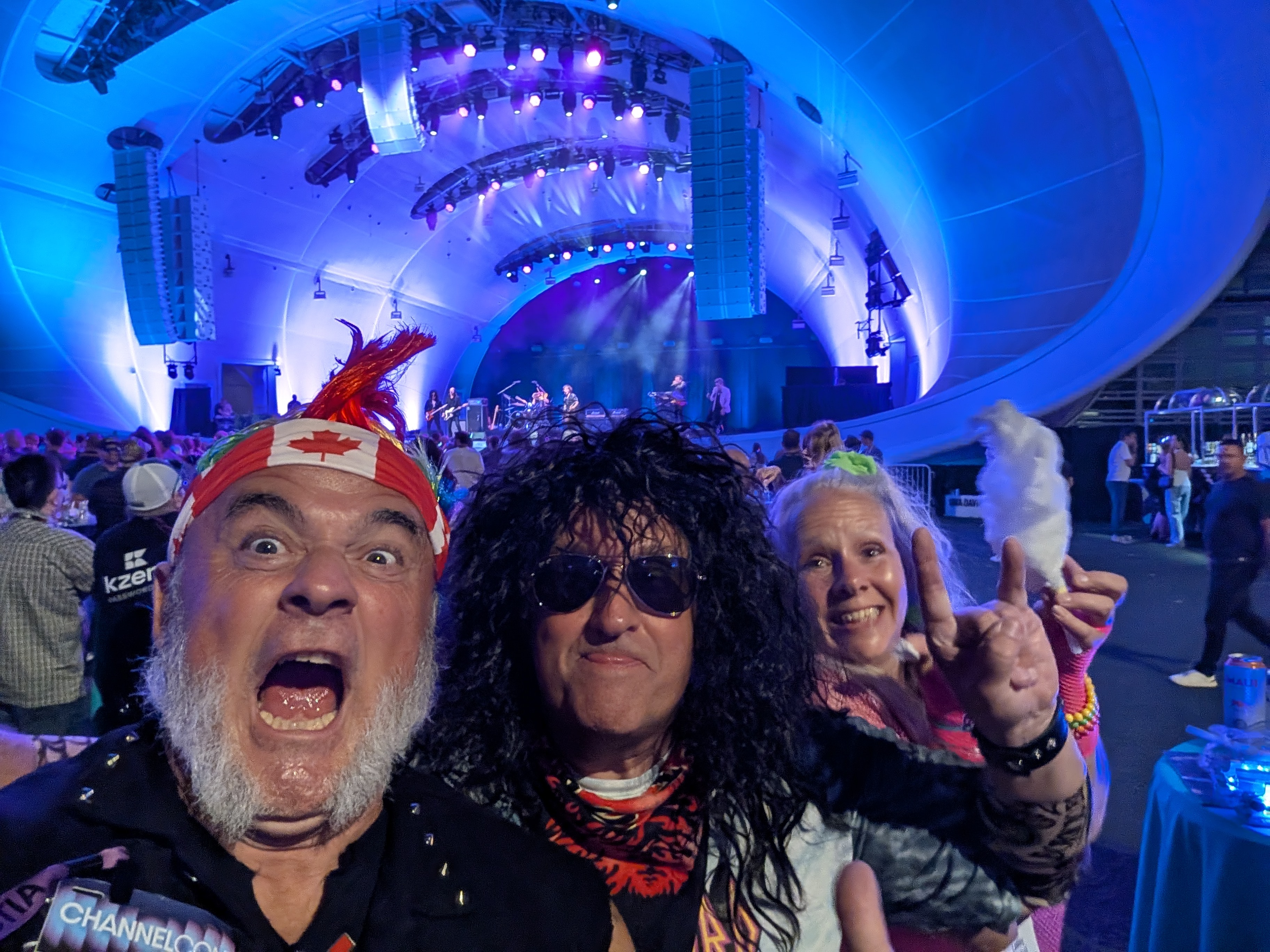
ChannelCon’s 1980s party at the Rady Shell was, in the most technically precise language available, awesome.
Lesley and I leaned all the way in. There was neon. There was hair. There were cassette tapes and Billy Idol records at the booth. There may have been enough hairspray in the room to create its own cybersecurity threat model.
The Royal Machines delivered the soundtrack, the waterfront venue looked spectacular and seeing Billy Idol live was the kind of surprise that turns a very good conference into a story you will still be telling years from now.
I also managed a concert selfie with Dan Wensley, who looked considerably more dignified in his bright jacket than I did in my Canadian mohawk.
Low bar, Dan, but well cleared.
From Movie Sets to Technology Solutions: Powerful Lessons from Ron Howard
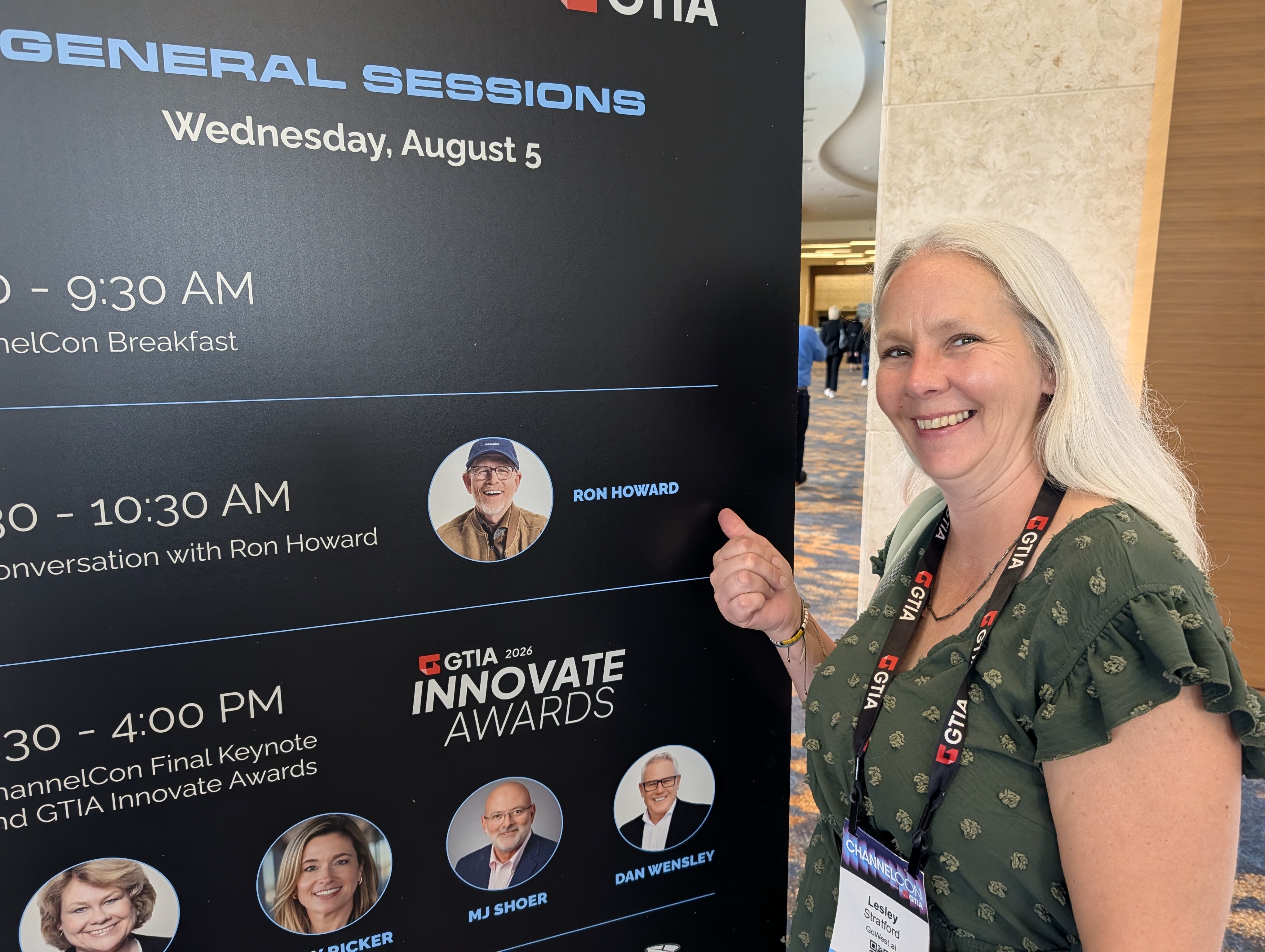
One of the most memorable moments at ChannelCon was the keynote conversation with legendary actor, producer and director Ron Howard.
At first glance, Hollywood filmmaking and the work of a technology solutions provider may seem worlds apart. One creates movies. The other manages technology, protects data and helps businesses improve their operations.
But as Ron shared stories from a career spanning more than six decades, the parallels became impossible to miss.
Start With a Clear Vision
A director is responsible for helping hundreds of people understand what they are trying to create together. Every actor, camera operator, editor, designer and technician needs to see how their work contributes to the final result.
Technology solutions providers face the same challenge.
A successful AI project cannot begin with a tool looking for a problem. It needs a clear business outcome. What workflow are we improving? What pain are we removing? What result will tell us the project worked?
When the vision is unclear, even talented teams can pull in different directions. When the vision is understood, individual contributions begin to reinforce one another.
Go Into the Friction Early
One of Ron’s most powerful pieces of advice was to “go into the friction.”
Problems rarely improve because we avoid talking about them. Creative disagreements, technical concerns, competing priorities and unclear expectations usually become more expensive the longer they are ignored.
That lesson should sound familiar to every MSP and ITSP.
If a client is worried about security, data quality, employee adoption or return on investment, address it early. Do not wait until implementation to discover that leadership expected one result, employees expected another and the technical team was solving a completely different problem.
Strong leaders create enough trust for people to raise concerns before those concerns become failures.
Collaboration Produces Better Results
Ron talked about the importance of surrounding yourself with talented people and giving them room to contribute.
A director may have the final responsibility, but great movies are not created by one person. They are built through the combined expertise of writers, performers, cinematographers, editors and countless others.
AI transformation works the same way.
Technology providers bring technical expertise, but department leaders understand the workflows. Employees know where time is being wasted. Security teams understand the risks. Executives understand the strategic priorities.
The best solution emerges when those perspectives are brought together.
Our job is not simply to arrive with an answer. Our job is to create the environment in which the right answer can be discovered, tested and improved.
Technology Is a Tool, Not the Story
Ron has watched filmmaking change from traditional film to digital production, computer generated effects, streaming platforms and increasingly accessible creative tools.
The technology changed dramatically. The need to tell a compelling story did not.
That may be the most important lesson for our industry.
Generative AI, automation and intelligent agents are incredibly powerful tools, but the technology is not the business outcome. Clients do not want AI simply because it is AI. They want shorter service times, better customer experiences, lower costs, new revenue and employees who can spend more time on meaningful work.
The tool matters, but the result is the story.
Smart Risk Creates Progress
Every movie involves risk. There are budget pressures, creative decisions, schedule challenges and no guarantee that audiences will respond as expected.
The answer is not to eliminate risk completely. That would eliminate experimentation too. The answer is to understand the risk, manage it responsibly and keep learning as the work progresses.
Technology solutions providers should approach AI in the same way.
Start with a clearly defined workflow. Establish the appropriate guardrails. Measure the results. Learn from the pilot. Then decide whether to improve it, expand it or stop it.
That is far more responsible than either rushing into AI without a plan or waiting indefinitely for every uncertainty to disappear.
Ron Howard’s keynote was a powerful reminder that technology may change the tools we use, but leadership remains deeply human.
Set a clear vision. Listen to talented people. Address friction early. Take smart risks. Keep the business outcome at the centre of the story.
Those are good lessons for making movies, and they may be even better lessons for building the next generation of technology services.
The Final Takeaway: The Channel Effect Is Real
ChannelCon’s theme was “The Channel Effect”—the idea that one connection, idea or decision can multiply into something much larger.
After three days in San Diego, that did not feel like a slogan. It felt like an accurate description of how this industry works.
A conversation at a booth becomes a pilot. A pilot becomes a service. A standards discussion becomes a safer industry. A local chapter becomes a trusted circle of peers. A finalist presentation becomes the confidence to build the next version.
Thank you to Nancy Hammervik, Dan Wensley and the entire GTIA team for creating an event that balanced insight, community, recognition and a healthy amount of 1980s excess.
Thank you to Mike Hannon and his family for sharing such a memorable evening with us.
And thank you to everyone who stopped at the GoWest.ai and BizVantage.ai booth to talk about what AI can become when we stop chasing hype and start solving workflows.
We may have left San Diego without the trophy, but we came home with something more useful: proof that our message is landing, our work belongs on the stage and the next door is already waiting to be opened.
So, without further ado: let’s turn AI into real business results.
Not a GTIA Member Yet?
The education was valuable, but the real power of ChannelCon was the community around it. If you are an IT service provider and have not joined GTIA yet, this is a great time to become part of that community.
Through GoWest.ai’s strategic partnership with GTIA, eligible ITSPs can receive 50% off GTIA membership.
Join GTIA and use promo code GOWEST.AI26 when you register. Eligibility and current terms are confirmed during registration.
Learn more about practical AI services at GoWest.ai and the BizVantage platform at BizVantage.ai.
Last updated: August 10, 2026