
Will AI Replace Jobs? Why Smart Businesses Are Choosing Empowerment Instead
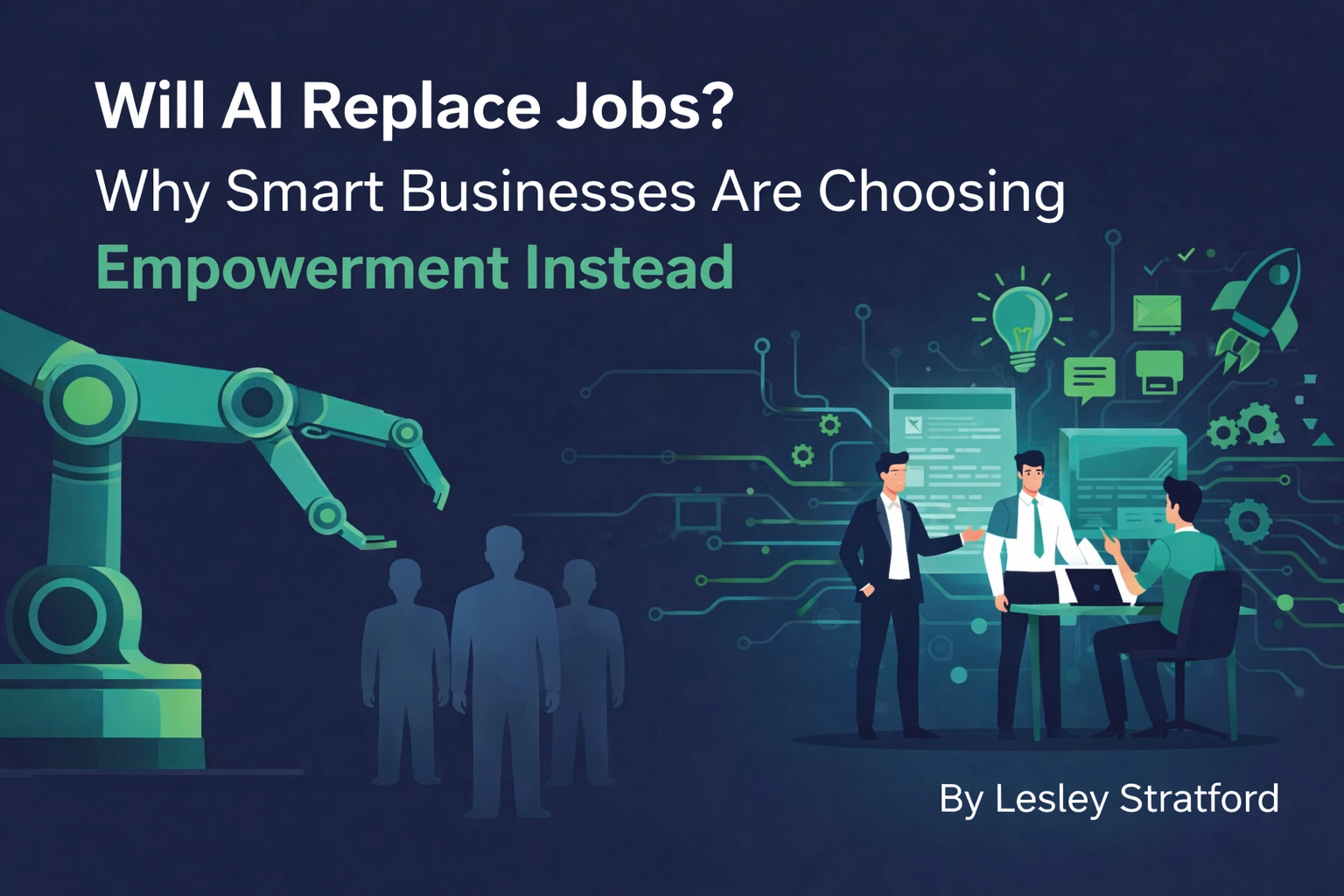
I’ve been hearing a lot of talk lately about AI and how it’s going to replace us. You’ve probably heard it too. It’s faster. It’s cheaper. It can do the work better and more efficiently than humans ever could. And yes, from a purely technical point of view, I understand where that argument comes from.
But I keep coming back to one simple thought.
Just because you can do something doesn’t mean you should.
The Reality Inside Small and Midsize Businesses
Most of the businesses we work with at GoWest are small to midsize companies. MSPs. Office equipment dealers. Technology providers. Family-owned operations that have been serving their communities for decades.
These aren’t places where people are just job titles or numbers on a spreadsheet. They’re people who know each other’s families. People who’ve weathered market downturns together. People who’ve built something side by side over years.
So when I hear sweeping statements about replacing people to save money, it feels disconnected from reality.
Most owners we work with aren’t looking to eliminate their teams. They’re trying to protect them. They’re trying to create margin in competitive industries. They’re trying to diversify revenue because traditional offerings are getting squeezed. They’re trying to reduce burnout in service departments and overwhelm in sales.
The question isn’t “How do we replace people?”
The question is, “How do we make the work sustainable?”
Where the AI Conversation Goes Wrong
We’re in what a lot of people are calling the Wild West of AI. Tools are launching weekly. Capabilities are evolving daily. It can feel overwhelming — but it’s also incredibly exciting.
The mistake many organizations make is starting with capability instead of strategy.
AI can write. AI can answer phones. AI can generate code. AI can summarize meetings. AI can automate workflows. That’s impressive.
But capability doesn’t equal intention.
At GoWest, when we conduct AI business readiness assessments, we don’t begin with “What jobs can we replace?” We begin with:
--Where is time being lost?
--Where are people frustrated?
--Where are bottlenecks happening?
--Where is margin being squeezed?
--Where are repetitive tasks draining high-value talent?
That shift changes everything.
What AI Is Actually Good At
AI is exceptionally good at:
Retrieving information instantly
Summarizing long documents or calls
Drafting content
Categorizing data
Handling repetitive, rules-based tasks
Assisting with quoting, configuration, and documentation
For example, we’ve worked with dealers who spend hours building quotes manually from complex price books. AI doesn’t replace the sales rep. It accelerates the configuration process, flags inconsistencies, and reduces errors. The rep still builds the relationship. The rep still owns the account strategy. The rep still closes the deal.
We’ve helped organizations implement AI assistants that answer common service questions internally — not to eliminate service coordinators, but to reduce interruptions and free them to focus on escalations and customer experience.
We’ve seen MSPs use AI to review tickets and identify patterns in recurring issues — not to replace technicians, but to help them spot proactive opportunities and reduce reactive fire drills.
Used this way, AI doesn’t take work away from people.
It gives time back.
And Time Creates Opportunity
When repetitive work is reduced, something interesting happens.
People start thinking differently about their roles.
Sales teams explore new services.
Operations leaders rethink workflows.
Service managers analyze trends instead of just reacting to them.
One of the most exciting shifts we’re seeing is AI being used as a revenue engine, not just a cost tool.
Dealers are exploring AI-based workflow assessments as a new client offering. MSPs are packaging AI readiness services. Teams are building internal tools that later become sellable solutions.
That kind of innovation doesn’t eliminate jobs.
It creates them.
It creates AI champions. Process designers. Automation specialists. New service lines. New advisory roles.
And those roles drive margin in ways that simple cost-cutting never could.
Jobs Are More Than Tasks
There’s also this narrative that AI can “do any job.” Maybe, if you reduce a job to a checklist.
But jobs aren’t just task lists.
They’re relationships. Judgment. Context. Tone. Experience.
--They’re the service coordinator who knows which customer needs a little extra patience.
--The sales rep who understands a client’s budget cycle.
--The technician who senses something’s off before a system fails.
They’re also the humans who organize fundraisers, support coworkers through illness, celebrate wins, and build culture.
Those contributions don’t show up neatly on a balance sheet.
But they are often the reason customers stay.
Empowerment vs. Replacement
I don’t think AI is something we can ignore — and honestly, I don’t think we should want to.
There is real opportunity here.
When used well, AI can:
--Reduce burnout
--Improve margins
--Accelerate decision-making
--Open new revenue streams
--Strengthen competitive positioning
But only when it’s deployed intentionally.
The future doesn’t feel like a choice between humans or AI.
It feels like a shift in how we work together.
AI handling the tedious, behind-the-scenes tasks.
People focusing on judgment, creativity, innovation, and connection.
That’s a far more powerful model than replacement.
The GoWest.ai Lens
At GoWest, we don’t approach AI from a place of fear.
And we don’t approach it from a place of blind automation either.
We look at it through the lens of possibility.
--How do we strengthen businesses?
--How do we protect and empower teams?
--How do we create sustainable margin?
--How do we turn AI into an asset — not a disruption?
Just because you can replace someone with AI doesn’t mean you should.
But if you use AI to elevate the people already doing the work?
That’s where transformation actually begins.
That’s the conversation worth having.
Last updated: February 13, 2026